Beyond Traditional Training: What if Operators Could Rehearse Catastrophes Before Facing Real-World Crisis?
Photorealistic graphics do not inherently generate operational readiness. A simulation environment can look visually stunning yet fail catastrophically when preparing an operator for mechanical breakdown, unpredictable operational anomalies, or multi-million-dollar split-second decisions. True organizational resilience occurs when companies abandon passive memorization in favor of interactive, intelligent environments that react in real time to human interventions.
Modern enterprises operate highly complex cyber-physical infrastructures. At Six Tenet, we understand that operational readiness cannot be solved through static manuals; it requires rigorous systems engineering integrating high-fidelity digital twins with deep reinforcement learning.
The Limits of Theory: Why SOPs and Video Modules Fall Short
For decades, industrial workforce development has relied on static artifacts: standard operating procedure (SOP) binders, 2D piping diagrams, and passive onboarding videos. The fatal assumption behind this approach is that daily operations are linear and predictable.
Static manuals train humans for the ideal scenario. In reality, operators never face isolated issues—they face cascading failures. A recorded lecture or multiple-choice quiz cannot replicate cognitive overload, panic, and sensory stress when an alarm panel strobes during a critical thermal excursion or communication blackout. When training is passive, personnel develop superficial procedural recall: they memorize steps A-B-C, but lack the deductive reasoning required when physical machinery behaves outside documented baselines.
From Theory to Execution: Bridging Complex Procedures into Dynamic Systems
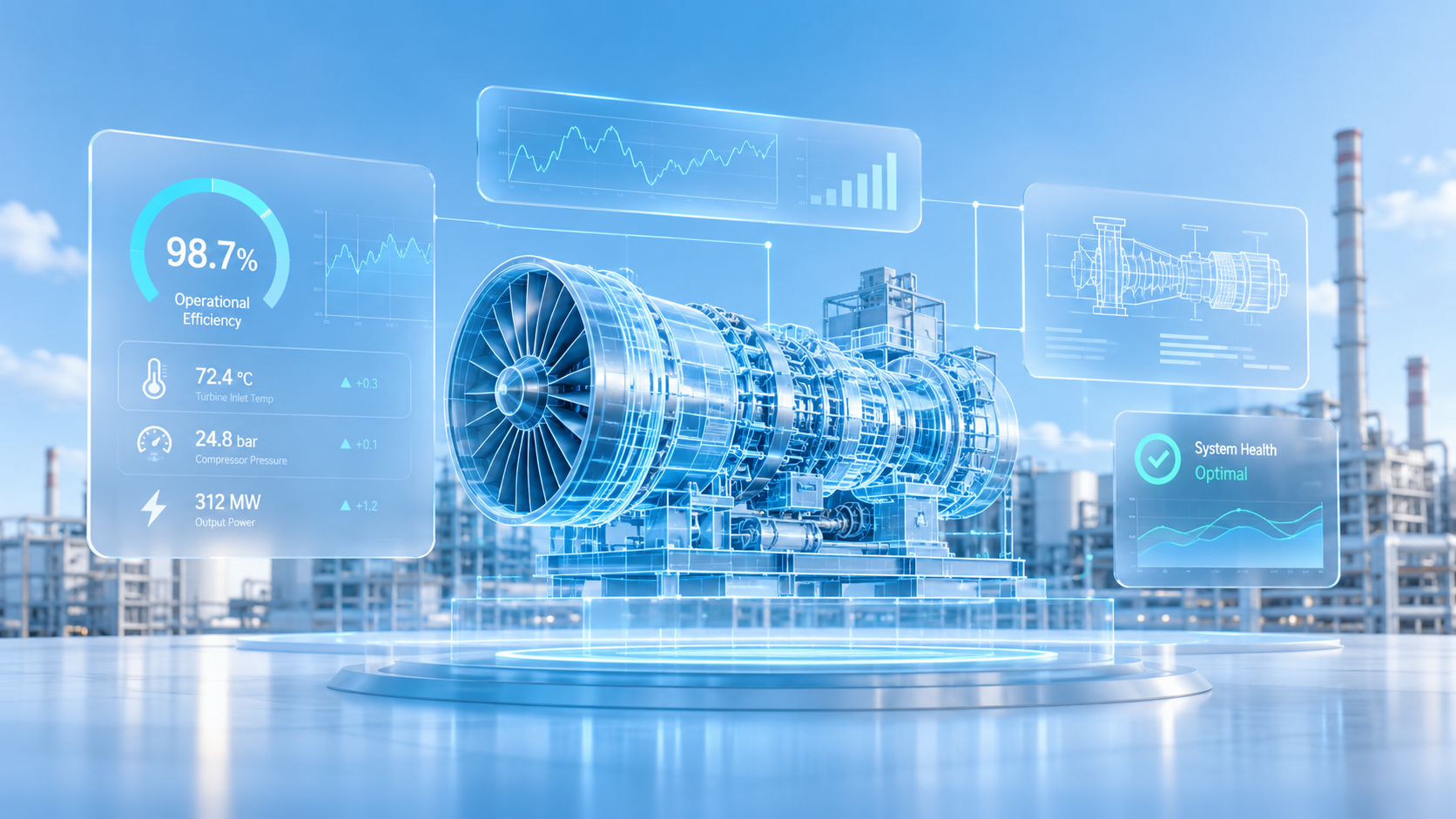
To build true cognitive and muscular memory, procedures must be lifted from static pages into dynamic, physics-compliant 3D environments. This is accomplished via interconnected Digital Twins and co-simulation architectures.
This is not superficial 3D modeling. It relies on established engineering standards such as the Functional Mock-up Interface (FMI) and Functional Mock-up Units (FMU) to encapsulate real thermodynamic, fluid dynamics, and kinematic governing equations directly within virtual assets. When an operator actuates a virtual relief valve inside the simulator, the system responds according to identical laws of physics governing physical plant hardware. Abstract procedures transform into a tactile, mathematically precise reality—allowing teams to experience the consequences before stepping foot on a live operating floor.
Applied Simulation: Industrial and Mission-Critical Case Studies
When dynamic simulation is implemented across high-risk environments, operational resilience improves immediately:
- Advanced Manufacturing & Predictive Maintenance: Global manufacturers deploy ecosystems like Siemens Xcelerator integrated with NVIDIA Omniverse to train technicians across virtual assembly lines before physical facilities are constructed. When unanticipated equipment stoppages occur, line operators have already rehearsed root-cause isolation within the digital twin. This pre-operational rehearsal has demonstrated up to a 25% reduction in reactive maintenance downtime.
- Maritime and Offshore Logistics Emergencies: In offshore energy and maritime logistics, co-simulation initiatives like TwinShip enable marine engineers to drill through high-severity maritime crises—such as sudden propulsion loss or micro-grid electrical collapse—using synchronized co-simulation frameworks. Personnel navigate the cognitive stress of asymmetric hull flooding without endangering lives or physical assets.
Living Environments: Generative AI and Dynamic Reaction Loops
Unlike legacy deterministic simulators—where pressing Button A invariably triggers Event B—modern training environments utilize artificial intelligence to synthesize evolving, non-linear scenarios.
Using Deep Reinforcement Learning algorithms such as Proximal Policy Optimization (PPO), autonomous agents inside the simulation dynamically calibrate scenario difficulty based on operator performance. If a trainee executes an erroneous mitigation step during an industrial alert, the simulation does not abort with a generic "Error" dialog. Instead, the engine computes real-world physical downstream effects, propagating secondary failures across adjacent subsystems and forcing the operator to resolve the cascading consequences of their own actions. Conversely, if an operator handles a scenario too predictably, the engine introduces stochastic variables—such as intermittent telemetry drift or degraded radio channels—to evaluate true situational adaptability.
Architectural Requirements: What Enterprises Actually Need
Transitioning from passive video training to operationally valid simulation platforms is fundamentally not a visual design problem. It is an infrastructure and data engineering challenge. To deploy mission-critical simulation systems, organizations require:
- Telemetry & Assessment Architecture (LRS): Implementing xAPI standards coupled with a high-throughput Learning Record Store (LRS). This infrastructure captures every decision, input trajectory, and millisecond of operator hesitation, converting interactive sessions into auditable, structured telemetry that quantifies operational competence.
- Deterministic Industrial Networking (TSN): When bridging real physical hardware (such as hardware-in-the-loop plant control desks) with virtual environments, organizations require sub-millisecond industrial protocols, such as OPC UA over Time-Sensitive Networking (TSN - IEEE 802.1Qbv), guaranteeing zero-jitter state synchronization.
- High-Level Systems Integration: The primary hurdle is architectural: synchronizing physics engines, low-latency distributed databases, dynamic AI models, and industrial fieldbuses into a unified execution pipeline.
This is where systems engineering is non-negotiable. At Six Tenet, we architect and orchestrate these integrated software foundations, turning simulation from an isolated experiment into a measurable, auditable, and scalable operational asset. When critical incidents occur, enterprises do not need operators who have read the manual; they need operators who have already survived the crisis in the digital world.
References
- Six Tenet — Engineering, Design & Growth Systems — Foundational principles of systems architecture, operational engineering, and scalable enterprise automation.
- Six Tenet — Systems Architecture Blog — Architectural design patterns for scalable, resilient enterprise infrastructure.
- Modelon — Functional Mock-up Interface: The Open Standard for Co-Simulation — Architectural overview of FMI standards, mathematical model exchange, and multi-physics coupling.
- Quix — Functional Mock-up Unit (FMU) Glossary & Integration — Definitions and runtime integration patterns for FMUs in continuous streaming architectures.
- NVIDIA — Siemens Accelerates Product Development and Innovation with Industrial AI — Industrial digital twins, Omniverse simulation, and reactive downtime mitigation metrics.
- Siemens Community — Merging the Digital and Real Worlds in an Industrial Experience — Factory-scale simulation architectures and hardware-in-the-loop workflows.
- ResearchGate — Vico: An Entity-Component-System Based Co-Simulation Framework — Co-simulation patterns and state synchronization in complex maritime engineering models.
- arXiv — Proximal Policy Optimization and its Dynamic Version for Sequence Modeling — Reinforcement learning foundations for dynamic scenario adjustment in interactive systems.
- arXiv — Proximal Policy Optimization with Adaptive Exploration — Advanced stochastic exploration algorithms for behavioral adaptation under uncertainty.
- xAPI.com — Learning Record Store (LRS) Architecture Guide — Structured telemetry capture, xAPI statement ingestion, and competency auditing standards.
- Veracity Tech — What is xAPI and What is an LRS? — Enterprise deployment patterns for scalable experience tracking.
- IACS Engineering — OPC UA: Open Platform Communications Unified Architecture — Industrial communication frameworks, data modeling, and machine-to-machine protocol security.
- ModulesLink — OPC UA FX & TSN Deterministic Networks Guide — Deterministic Ethernet, IEEE 802.1Qbv time-aware shapers, and sub-millisecond industrial synchronization.