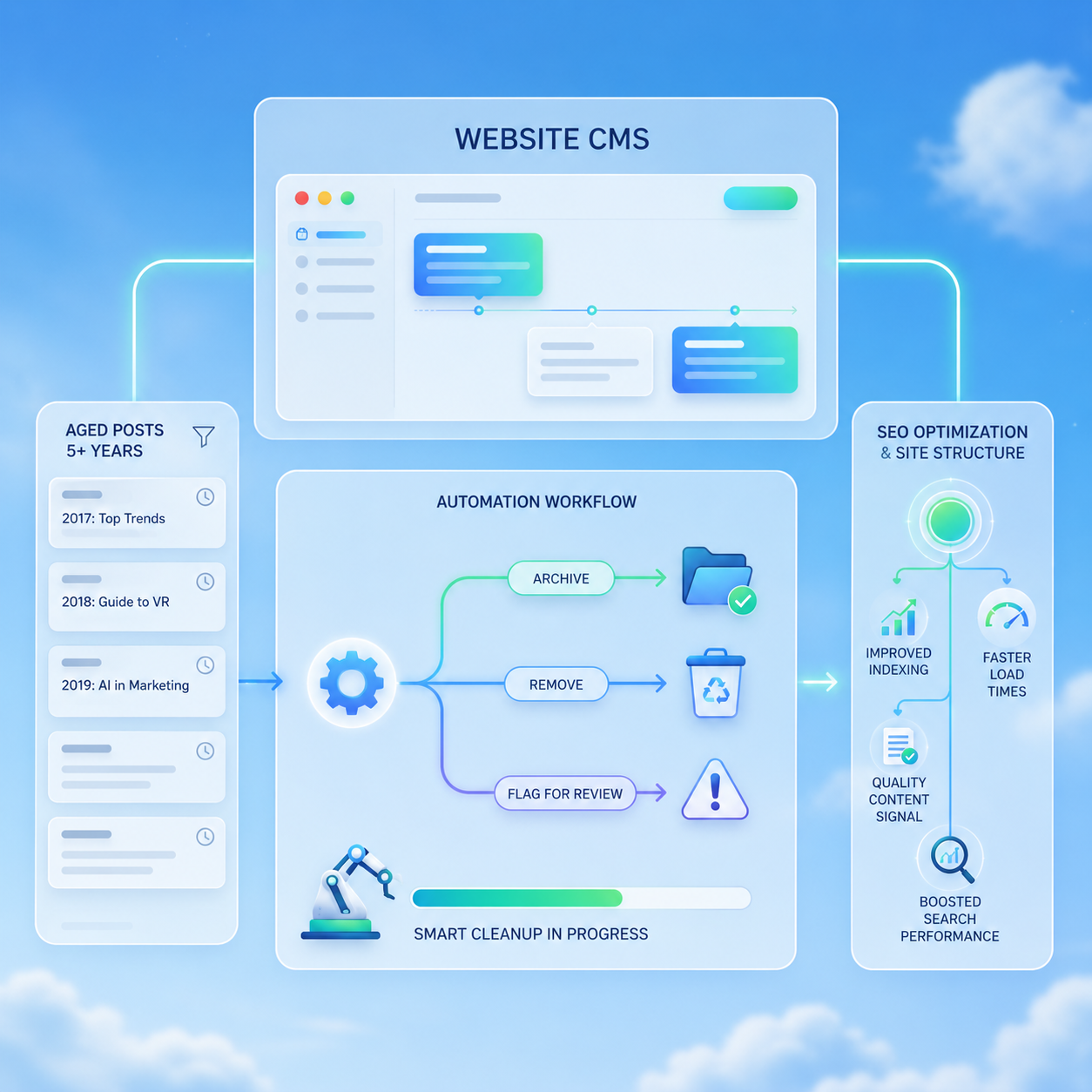
Automation has become one of the most attractive solutions for growing companies.
Reduce repetitive work.
Increase productivity.
Lower operational costs.
Move faster.
But many automation initiatives fail for a simple reason:
The company automates a process before understanding whether the process itself works.
Technology can execute instructions faster. It cannot determine whether those instructions make sense.
Automating chaos creates faster chaos
A broken process does not become efficient when automated. It becomes harder to notice.
Consider a manual workflow:
- A customer request arrives.
- An employee reviews the information.
- Someone decides what happens next.
- Another person updates a system.
- A manager approves the final step.
The process may already contain unnecessary steps, unclear ownership, or missing information.
If a company automates this workflow without redesigning it, the result is simply a faster version of the same inefficiency. The organization has optimized execution without improving the system.
How to identify processes that are not ready for automation
Not every repetitive task should immediately become automated. Before automation, companies should evaluate whether a process has:
- Clear Ownership: Does everyone understand who is responsible for the outcome? Automation cannot solve unclear accountability.
- Defined Inputs and Outputs: Does the process consistently receive the right information and produce a predictable result? Automation depends on reliable conditions.
- Stable Decision Rules: Are decisions based on clear criteria, or does the process depend on individual judgment every time? Some processes require redesign before automation.
- Measurable Outcomes: Does the company know what improvement it expects? Automation without a defined objective often becomes another tool without a clear purpose.
A fictional example: Onboarding Friction
A financial services company wants to automate customer onboarding. The leadership team believes the current process is too slow because employees manually review applications. They introduce automation to speed up approvals.
However, the automation quickly creates new problems: applications are routed incorrectly, missing information creates exceptions, and employees spend more time correcting automated decisions than processing requests manually.
The company did not have an automation problem. It had a process design problem.
Before automation, they redesigned the workflow:
- Defined approval criteria.
- Created clear ownership between teams.
- Standardized required information.
- Identified which decisions could be automated and which required human review.
The result was not just faster processing. It was a better operational system.
The correct order: process → system → automation
Successful automation follows a sequence:
- Process: Understand how work actually happens, remove unnecessary steps, and clarify responsibilities.
- System: Create reliable workflows and information structures. Ensure teams, tools, and data operate together.
- Automation: Use technology to improve a process that is already well designed.
Automation should amplify a strong system, not compensate for a weak one.
The Principle
Automation is not a replacement for operational thinking.
The companies that benefit most from automation are not the ones that automate the most tasks. They are the ones that understand which tasks should exist, how they should work, and where technology creates real leverage.
Before asking: “How can we automate this?”
Companies should ask: “Should this process work this way in the first place?”